
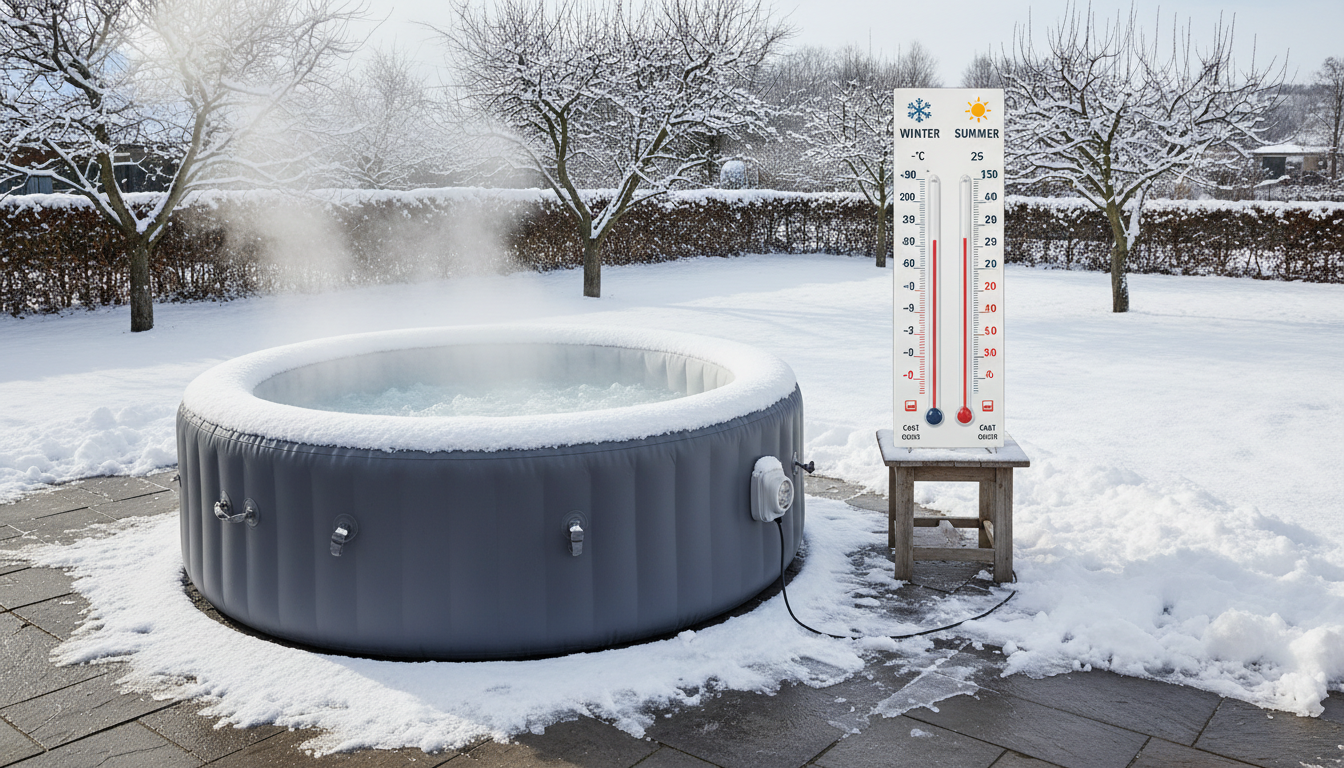
Running an inflatable hot tub in winter typically costs $60 to $120 per month, compared to $20 to $45 per month in summer, assuming a standard 1,200-watt to 1,500-watt tub, a utility rate of around $0.13 per kWh, and a target temperature between 100°F and 104°F. The gap is real and it is driven almost entirely by how hard the heater has to work against cold air and cold incoming water.
If you have ever opened your electricity bill in February and wondered why your little backyard tub is suddenly costing as much as a window air conditioner, you are not imagining things. This article walks through the seasonal math in detail, the factors that push costs up or down, and the practical steps that actually shrink the gap between your summer and winter bills.
Why Winter Costs So Much More
An inflatable hot tub’s heater does one thing: it moves the water temperature from wherever it is toward your set point and then holds it there. In summer, with 75°F ambient air and tap water coming in at 68°F to 72°F, the heater has maybe 30°F of work to do. In January, with 30°F air and tap water at 45°F to 55°F, it has 50°F to 60°F of work to do, and it is simultaneously fighting heat loss through the walls, floor, and cover the entire time.
Heat loss through the walls of a typical inflatable PVC tub is significant because those walls are thin, usually around 0.4 inches of air-cushioned material with no meaningful insulation value. A hard-shell hot tub has dense foam packed around every panel. An inflatable does not. That structural difference is one of the core trade-offs that separates inflatable tubs from hard-shell models in cold weather, and it shows up directly on your bill.
The Real Numbers: A Worked Example by Season
Take a common 1,500-watt inflatable hot tub holding 250 gallons. At $0.13 per kWh, that heater costs roughly $0.195 per hour to run. Here is how the seasons compare:
| Scenario | Ambient Temp | Starting Water Temp | Heat-Up Time to 102°F | Est. Monthly Cost |
|---|---|---|---|---|
| Summer (mild climate) | 80°F | 72°F | 3 to 4 hours | $20 to $35 |
| Summer (hot climate) | 90°F+ | 78°F | 1.5 to 2.5 hours | $15 to $25 |
| Winter (mild, 40-50°F nights) | 45°F | 55°F | 8 to 10 hours | $50 to $75 |
| Winter (cold, below 32°F nights) | 25°F | 45°F | 12 to 16 hours | $90 to $120 |
Why These Differences Matter for Your Budget
The heat-up column is where people get surprised. A 12-hour initial heat-up at $0.195 per hour costs $2.34 just to reach temperature. If you drain and refill monthly (which is the standard recommendation for inflatable tubs), that one event accounts for a meaningful portion of your bill before you have soaked a single time. The monthly cost estimates above assume you heat up once per fill cycle and then run the thermostat on its normal cycling schedule for the rest of the month.
Electricity rates vary widely. If you are in a state like California or Connecticut where rates exceed $0.20 per kWh, multiply those monthly figures by roughly 1.5. If you are paying $0.10 per kWh in a lower-cost region, your numbers will be closer to the low end of each range. A closer look at how wattage and local rates combine to set your actual inflatable hot tub electricity costs can help you run this math for your specific zip code.
The Four Biggest Factors That Move the Number
- Ambient Temperature: Every 10°F drop in outside temperature adds roughly 15% to 20% to the heater’s duty cycle. This is the single largest variable between seasons.
- Cover Condition: A sagging, waterlogged, or poorly fitted inflatable tub cover can let 20% to 30% of your heat escape. A tight, dry cover is the cheapest insulation upgrade you can make.
- Ground Insulation: Cold ground pulls heat out through the floor of an inflatable tub faster than cold air pulls it through the sides. A purpose-made thermal ground mat typically costs $30 to $60 and can cut floor heat loss by 30% or more.
- Wind: Even modest wind speeds accelerate surface heat loss dramatically. A simple windbreak (a fence, trellis, or even outdoor curtains) makes a measurable difference in winter running costs. If you want a fuller picture of the strategies that keep winter soaking practical, the guide on winter hot tub use and how to keep soaking when it’s freezing outside covers both setup and safety in detail.
- Target Temperature: Running at 98°F instead of 104°F in a 30°F winter environment is not a minor tweak. That 6°F reduction in target temperature can lower your monthly bill by $10 to $20 because the heater maintains a smaller differential against the cold air.
Keeping the Tub Running All Winter: Is It Actually Worth It?
The practical question most owners face is whether to leave the tub running continuously or drain it and refill only when they want to use it. The answer depends on how often you soak. For owners who use their tub three or more times per week, keeping it at temperature continuously is almost always cheaper than repeated heat-up cycles, even in winter, because each cold fill from scratch costs more in electricity than a few days of maintenance heat.
If you use the tub once a week or less, the math shifts. Heating a 250-gallon tub from 50°F to 102°F once a week in winter costs roughly $2.50 to $3.50 per session in electricity for the heat-up alone, plus ongoing losses. At that frequency, you might spend $40 to $55 per month total, which is still more than summer but manageable.
One thing to watch in winter: inflatable tubs are generally not rated for use when ambient temperatures fall below 40°F by most manufacturers. Some owners push past this limit with windbreaks and insulating wraps, and it works, but it increases wear on the pump and heater. Understanding the cold-weather limits of inflatable hot tubs before you commit to year-round use will save you from an expensive motor replacement down the road.
Water Chemistry Costs Across Seasons
Electricity is not the only seasonal variable. Hot water in a heavily used winter tub can chew through sanitizer faster because bathers are often in longer (the cold air makes the warmth feel better). On the other hand, UV degradation of chlorine is lower in winter because there is less direct sunlight. The net effect is that your chemical spend stays roughly flat season to season, but the type of problem shifts: in summer you are replacing chlorine lost to sun, in winter you are managing higher bather load from longer soak sessions. Using a balanced dichlor routine and testing before each session keeps both under control without overcomplicating things. We make AquaDoc Dichlor Granules specifically for inflatable and portable tubs where precise dosing matters, and a 2-pound tub lasts most single-tub owners through a full season of regular use.
For a broader look at how water chemistry interacts with real usage patterns, the article on hot tub questions answered with real stories and science covers a range of scenarios that apply directly to inflatable owners.
Practical Ways to Cut Winter Running Costs
- Step 1: Add a thermal ground mat. Place it under the tub before you inflate. A $40 foam mat can cut floor heat loss by up to 30%, which translates to real savings over a three-month winter season.
- Step 2: Inspect and reseat the cover. Make sure the cover sits flush with no gaps. Even a 2-inch gap at one corner can leak enough heat to add $5 to $10 to your monthly bill in cold weather.
- Step 3: Build a windbreak. Lattice panels, outdoor curtains, or a simple three-sided enclosure reduce surface heat loss dramatically when temperatures drop and wind picks up.
- Step 4: Lower your target temperature slightly. Drop from 104°F to 99°F during weeks when you will not use the tub often. The tub will still reach full temperature within 20 to 30 minutes when you turn it up before a soak.
- Step 5: Time your heat-ups. If your utility has time-of-use rates, schedule heat-up cycles during off-peak hours (usually late night or early morning) to bring the per-kWh cost down.
Frequently Asked Questions
How much does it cost to run an inflatable hot tub per month in winter?
In a cold climate with overnight temperatures regularly below 40°F, expect $60 to $120 per month for a 1,200-watt to 1,500-watt inflatable tub at an average rate of $0.13 per kWh. In a milder winter zone (40°F to 55°F nights), costs typically land between $45 and $75 per month. Good insulation and a tight cover can push you toward the lower end of either range.
How much does an inflatable hot tub cost to run per month in summer?
Summer running costs for the same tub fall in the $20 to $45 per month range in most climates. In very hot climates where ambient temperatures exceed 85°F, costs can drop below $20 per month because the heater runs infrequently and heat losses through the walls are minimal.
Does an inflatable hot tub use a lot of electricity in winter?
More than many owners expect before they see the first winter bill. A 1,500-watt heater heating 250 gallons of 50°F water to 102°F will run for 10 to 14 hours continuously, costing $2 to $2.75 for that single heat-up cycle alone. After that, the heater cycles on and off to maintain temperature, and in sub-freezing air it may run more than it rests. Comparing those figures to the running cost of a hard-shell hot tub puts the inflatable’s energy draw in useful perspective.
Is it worth running an inflatable hot tub in winter?
Yes, with the right setup. Add a ground mat, keep the cover in good condition, and add a windbreak, and you can hold winter costs to $50 to $80 per month while still soaking comfortably in temperatures down to around 40°F outside. Without those measures, the costs and the wear on the pump make it a tougher case to justify.
What temperature should I set my inflatable hot tub to in winter to save money?
Set it to 95°F to 100°F during low-use periods and raise it to your preferred temperature an hour before soaking. Each degree of set-point reduction lowers the heater’s duty cycle, and in cold weather that effect compounds quickly. Dropping from 104°F to 98°F as a default maintenance temperature can save $10 to $20 per month over a full winter without any noticeable loss of comfort during actual use.
The bottom line: an inflatable hot tub costs roughly two to three times more to run in winter than in summer, with real figures landing around $20 to $45 in warm months and $60 to $120 when temperatures drop. Add insulation at the floor, seal the cover, and block the wind, and you can close that gap by 25% to 40%.