
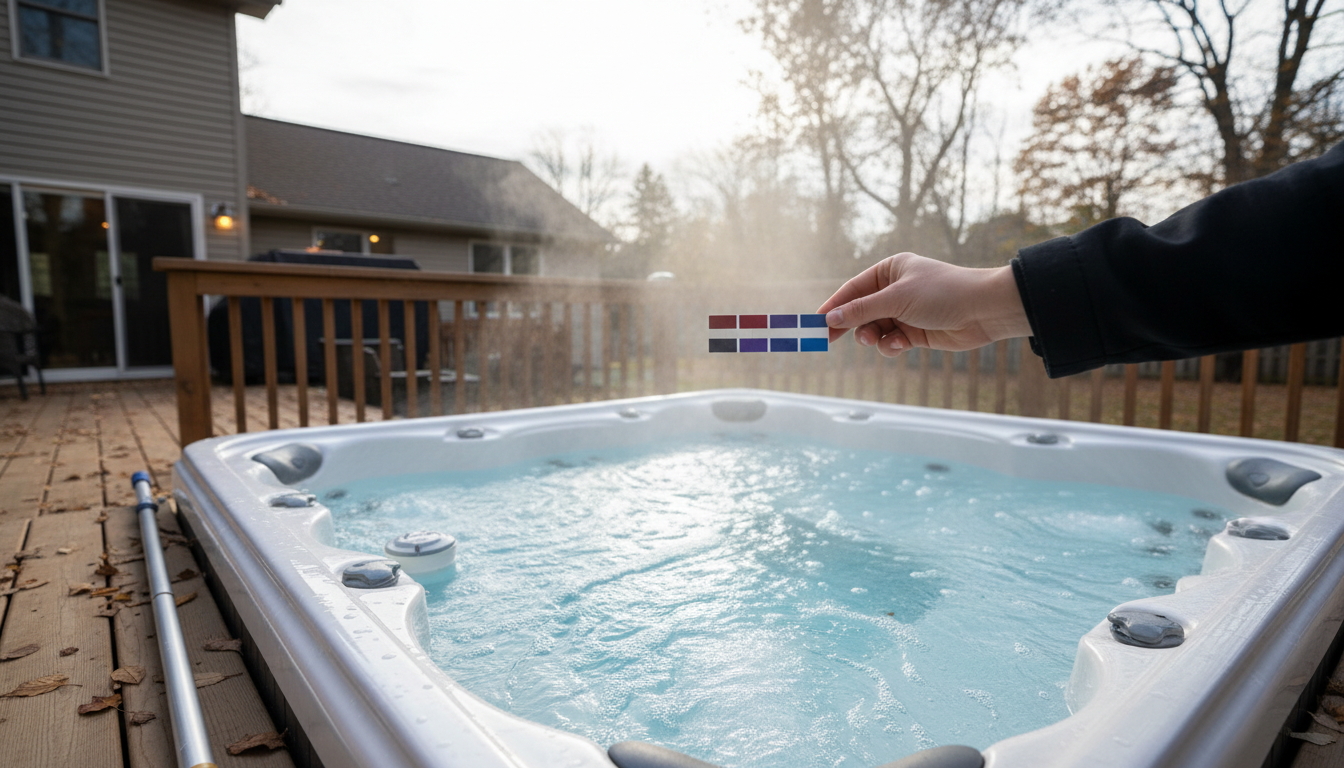
You test the water right before closing your 6-person hot tub for winter, and the bromine reads 12 ppm. Now what? Do you still add a closing dose, leave it alone, or drain some water first? That single number can make the difference between a tub that opens clean in spring and one that greets you with a foamy, bacteria-laced mess.
The short answer: if bromine is already above 10 ppm in a 6-person hard-shell hot tub (typically 350 to 400 gallons), you do not need to add more sanitizer before closing. The target closing range is 10 to 20 ppm, so a reading of 12 ppm is squarely in that window. What this article walks through is why that range matters, what to do when bromine is slightly outside it in either direction, how to work the numbers for your specific tub, and the full closing sequence so the water stays protected all winter.
Why the Closing Bromine Target Is 10 to 20 ppm
Normal soaking water runs 3 to 5 ppm of bromine. At closing, you push it higher because the water will sit motionless under a sealed cover for months, sometimes in a cold garage or under snow. Low sanitizer in a sealed, warm-enough environment is an invitation for biofilm to establish itself inside the plumbing and jet bodies where a brush cannot reach. Pushing to 10 to 20 ppm gives you a buffer that erodes slowly over winter without the daily top-ups you would normally do.
Why not go higher? Above 20 ppm, bromine becomes aggressive toward the soft components in your tub: o-rings, gaskets, and the acrylic shell finish can all show wear if they sit in contact with a concentrated halogen solution for three or four months. The 10 to 20 ppm window is the sweet spot that handles microbiological protection without punishing your equipment.
What “Already High” Actually Means Before You Act
Test strips and digital testers read differently, and this matters at closing. Most strips top out around 10 ppm and simply show “high” above that threshold. A digital colorimeter or a drop-based test kit gives you the actual number. Before you decide whether to add anything, know your real reading.
- Below 3 ppm: The bromine bank is depleted. Add sodium bromide to rebuild the bank (roughly 1 to 2 oz for a 400-gallon tub), then activate it with a non-chlorine shock at about 2 oz per 400 gallons. That should land you near 10 to 15 ppm.
- 3 to 9 ppm: You are below the closing target. Shock with a non-chlorine oxidizer (potassium monopersulfate) at the standard closing rate to push the level up into the target window. No sodium bromide is needed if you have been using bromine tablets regularly since the bank is already established.
- 10 to 20 ppm: You are exactly where you want to be. Do not add more bromine. Move directly to the rest of the closing checklist.
- Above 20 ppm: Remove the cover, run the jets, and let the level off-gas for 30 to 60 minutes before sealing. Do not add any sanitizer until the reading drops below 20 ppm.
The Math for a 6-Person Hard-Shell Tub
A standard 6-person hard-shell hot tub holds 350 to 420 gallons depending on the shell depth and seat configuration. For this example, use 380 gallons as a working figure.
Say your tub reads 6 ppm bromine right before closing. You want to reach 15 ppm, so you need to raise it by 9 ppm. One ounce of sodium bromide per 100 gallons raises bromine by roughly 12 ppm when activated. For 380 gallons, that is 3.8 oz of sodium bromide, which would overshoot slightly. Use 3 oz to target a rise of about 9 to 10 ppm, landing near 15 to 16 ppm total. Follow immediately with 1.5 oz of non-chlorine shock to activate the bromide into free bromine. That combination costs you under $3 in chemicals and leaves the water properly protected.
Now flip it: your tub reads 12 ppm. You need zero additional bromine. Adding a full closing shock on top of a reading that is already in range would push you to 22 to 25 ppm, which is above the safe window for equipment. That is a common mistake pool and spa owners make because the seasonal instinct is to “add more before closing,” but with bromine, more is not always better.
Step-by-Step Closing Sequence Once Bromine Is in Range
Getting bromine right is one piece. Here is the full shutdown sequence for a 6-person hard-shell tub so no step gets missed.
- Step 1: Test all chemistry. Check pH (target 7.2 to 7.6), total alkalinity (80 to 120 ppm), and calcium hardness (150 to 250 ppm) alongside bromine. Correct pH and alkalinity first because both affect how effective bromine actually is. If you need a reference for pH adjustment before shutdown, a deeper look at hot tub chemistry decisions can help you sort which correction to make first.
- Step 2: Run a line flush. Add a plumbing flush product and run all jets on high for 15 to 20 minutes. This dislodges biofilm from the internal plumbing before you seal the tub. Skipping this step is one of the most common winterizing mistakes, because any biofilm left in the lines will be very happy sitting in warm-ish standing water all winter.
- Step 3: Confirm bromine is in range and adjust if needed using the guidance in the section above.
- Step 4: Clean and reinstall or store the filter cartridge. Rinse it, soak it in a filter cleaning solution for at least one hour, rinse again, and reinstall if you are leaving water in the tub. If you are draining, store the cartridge dry.
- Step 5: Turn off the heater and set the thermostat. If leaving water in (common in mild climates or heated garages), drop the temperature to the lowest frost-protection setting your controller allows, usually 35 to 40°F. If draining completely, shut down and unplug after blowing out the lines.
- Step 6: Seal the cover. Lock down the cover clips and ensure the cover seam is centered so cold air cannot channel in and freeze the equipment bay.
Leaving Water In vs. Draining Completely
This decision changes how much your closing bromine level actually matters. If you leave water in the tub through winter (appropriate when the tub is in a heated space or the climate stays above 20°F), that 10 to 20 ppm residual needs to last three to five months. It will slowly erode, and that is fine because the cold temperature dramatically slows microbial growth.
If you drain completely, bromine levels are irrelevant. Your job is to remove all water from the plumbing, blow out the jet lines, and dry the shell. The guide to hot tub use in freezing weather covers the tradeoffs between keeping a tub running through winter versus shutting it down cold, which can help you make that call before you commit to either path.
Bromine vs. the Bromide Bank: One More Thing to Check
A high free bromine reading is not the same as a healthy bromide bank. Bromine works in a cycle: free bromine (hypobromous acid) oxidizes contaminants, converts to bromide ions, and gets re-activated by shock back into free bromine. If you have been shocking regularly but not adding sodium bromide, your free bromine number might test fine right now but have nothing to regenerate from once you close the cover and stop shocking.
At closing, dose one final non-chlorine shock dose (about 1.5 oz for 380 gallons) even if free bromine reads fine. That shock converts any residual bromide already in the water into active free bromine, topping off the closing level without adding unnecessary chemical load. AquaDoc makes a non-chlorine shock sized for hot tubs that pool owners reach for in exactly this situation because it activates the bromide bank without adding cyanuric acid or clouding the water.
If your tub is one that has had trouble holding a sanitizer reading all season, the problem may run deeper than a low closing dose. A persistent failure to hold bromine often points to a compromised bromide bank, high bather load residue, or biofilm in the plumbing, and understanding why a hot tub won’t hold a sanitizer reading is worth reviewing before you close, so you are not opening to the same problem next spring.
Frequently Asked Questions
How much bromine should I add when closing a 6-person hot tub for winter?
If bromine already reads 10 to 20 ppm, add nothing. If it reads below 10 ppm, add sodium bromide at roughly 1 oz per 100 gallons (about 3 to 4 oz for a 380-gallon tub) and follow immediately with 1.5 oz of non-chlorine shock to activate it. The closing target is 10 to 20 ppm, and that range should hold through a full winter dormancy.
What should bromine level be in a hot tub before closing for winter?
Target 10 to 20 ppm at closing. That level is high enough to suppress biofilm and bacterial growth through months of dormancy, but low enough to avoid damaging o-rings, gaskets, and the acrylic shell when the water sits motionless and sealed.
Is it safe to add bromine shock to a hot tub that already reads 8 ppm?
Yes. At 8 ppm you are just below the closing window, so one non-chlorine shock dose (about 1.5 oz for a 380-gallon tub) is appropriate and will push the level to roughly 12 to 14 ppm. Skip the sodium bromide top-up since the bank is already adequate at that reading.
Can I close a hot tub with bromine levels above 20 ppm?
It is better to wait. Run the jets with the cover open for 30 to 60 minutes to let the level drop below 20 ppm before sealing. Levels above 20 ppm sitting on o-rings and seals for a full winter can cause degradation you will discover the hard way when you open in spring.
Do I need to add bromine if I am fully draining my hot tub for winter?
No. Bromine levels only matter when water is left in the tub. If you are draining completely, focus on flushing the plumbing, blowing out the jet lines, and drying the filter cartridge. There is no standing water to protect, so sanitizer levels are irrelevant.
When your bromine is already in the 10 to 20 ppm range, the right closing move is to leave it alone and focus on the rest of the shutdown checklist. Adding more sanitizer to an already-protected tub does not make the water safer over winter; it just creates a problem you will have to dilute away in spring.