
Your hot tub is throwing a “Pressure” or “FLO” error, the heater won’t fire, and you’ve already confirmed the water level is fine and the filter isn’t clogged. Sound familiar? A failed pressure switch is one of the most common culprits, and the good news is that it’s also one of the cheaper hot tub repairs you’ll run into.
Replacing a hot tub pressure switch costs $15 to $60 for the part alone, or $150 to $300 total if you hire a technician. This article walks through what the switch does, what drives the cost up or down, when a DIY swap makes sense, and how to avoid paying for a new switch when the real problem is somewhere else.
What a Pressure Switch Actually Does
The pressure switch is a small sensor, usually about the size of a quarter, mounted on or near the heater manifold. Its one job is to confirm that water is actually moving through the heater before allowing the heating element to energize. When the pump runs and pressure rises above a set threshold (typically 1 to 2 PSI), the switch closes the circuit and the heater turns on. If the switch never closes – or gets stuck closed – the spa pack either refuses to heat or throws a fault code to protect the element from running dry.
It’s a simple part doing a critical safety job. When it wears out, corrodes, or gets clogged with scale, the whole heating system effectively goes offline even though the pump, element, and control board may be perfectly fine.
Hot Tub Pressure Switch Replacement Cost Breakdown
The cost splits into two buckets: the part and the labor. Here’s how each one plays out.
Part Cost: $15 to $60
Generic aftermarket pressure switches for common spa packs (Balboa, Gecko, Hydroquip) run $15 to $30 at most spa parts suppliers. OEM switches from the original manufacturer cost more, typically $35 to $60, and are worth it if your spa pack is still under warranty or if compatibility is a concern. The price difference is small enough that buying the correct OEM part is usually the right call – a $12 savings isn’t worth a callback if the aftermarket switch trips at the wrong pressure.
Labor Cost: $75 to $200
Most technicians charge a flat service call fee of $75 to $150 just to show up, regardless of what they find. The actual pressure switch swap takes 20 to 45 minutes, and at a shop rate of $85 to $150 per hour, that adds another $30 to $100 on top of the callout fee. Total labor bill: roughly $100 to $200 depending on your region and the tech’s rate.
Full Cost Summary
| Repair Path | Part Cost | Labor Cost | Total Range |
|---|---|---|---|
| DIY replacement | $15 – $60 | $0 | $15 – $60 |
| Local spa technician | $15 – $60 | $100 – $200 | $150 – $300 |
| Manufacturer service center | $35 – $60 (OEM) | $120 – $250 | $175 – $350 |
Why These Differences Matter
The technician vs. DIY gap is real, but it’s not just about skill. A tech brings a multimeter, a pressure gauge, and experience confirming the switch is actually the problem before touching anything. If you’re confident in the diagnosis – you’ve got a clear “Pressure” fault code, water flow is confirmed good, and the switch tests open with a multimeter when it should be closed – the DIY path is a $20 fix. If you’re not sure what’s actually wrong, paying a tech to diagnose first can save you from buying parts that don’t solve the problem.
What Drives the Cost Higher
A straightforward pressure switch swap is cheap. A few things can push the bill well past $300:
- Hard-to-reach location: Some spa packs are tucked into tight equipment bays that require partial cabinet removal to access. Add 30 to 60 minutes of labor when that’s the case.
- Scale damage to the heater manifold: If the switch failed because scale buildup clogged the pressure port, that same scale may have damaged the heating element or manifold fittings. A full manifold repair can run $200 to $600.
- Misdiagnosis: If a previous repair attempt replaced the wrong part, you’ll pay twice. This is the most common cost multiplier – see the section below on ruling out other causes.
- Older or discontinued spa packs: A pressure switch for a 15-year-old spa with a discontinued control system may require a generic substitute that needs a pressure adjustment. If the replacement doesn’t seat properly, the manifold fitting may need to be retapped or replaced.
- Emergency or weekend service: After-hours service calls often carry a $50 to $100 surcharge on top of the standard callout fee.
DIY vs. Hiring a Tech: How to Decide
The pressure switch is one of the more DIY-friendly hot tub repairs. The switch threads or clips onto the heater manifold, connects to the spa pack with two small wires, and usually takes one wrench and a Phillips screwdriver to swap. The process for most Balboa and Gecko systems looks like this:
- Turn off the breaker to the hot tub and confirm power is off at the spa pack.
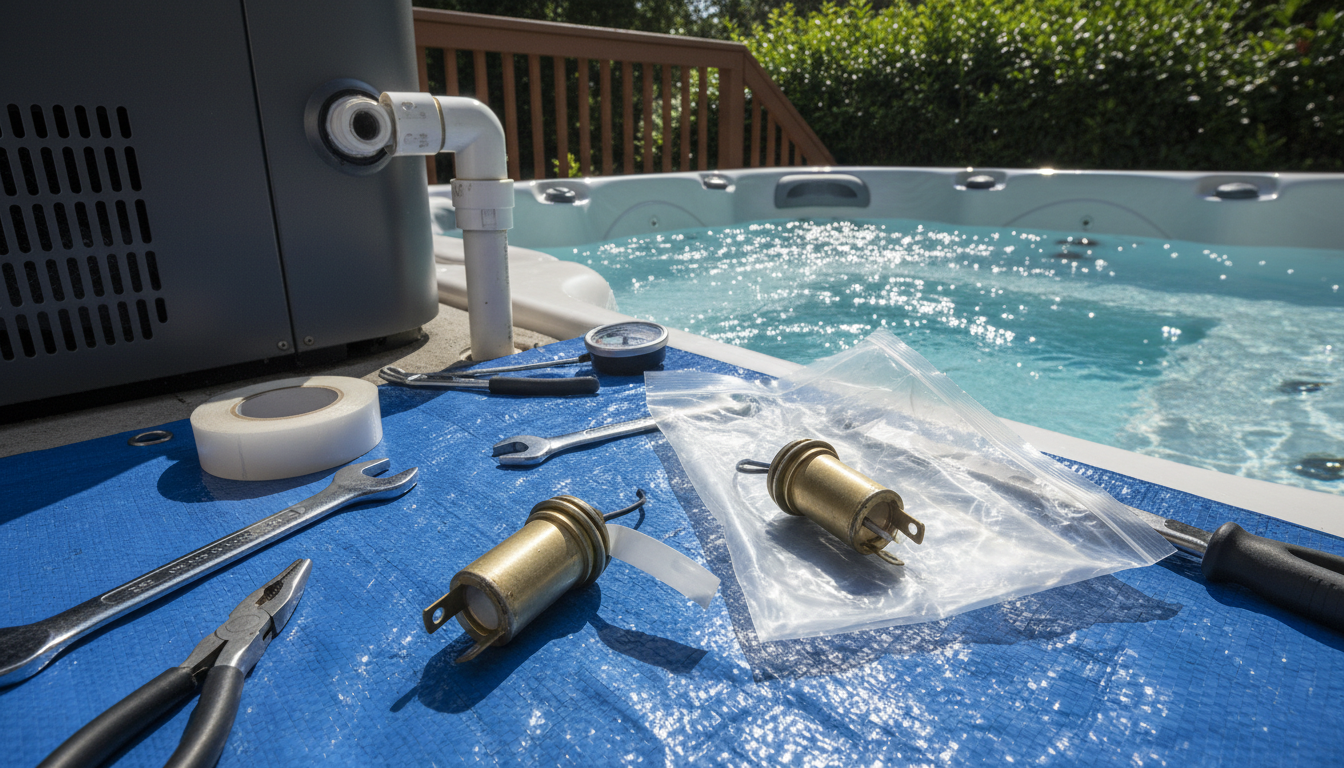
- Locate the pressure switch on the heater manifold – it looks like a small brass or plastic cylinder with two wire terminals.
- Note the wire positions (a phone photo works fine), then disconnect the two wires.
- Unscrew or unclip the old switch. Have a rag ready – a small amount of water may drip.
- Thread in the new switch snugly. Don’t overtighten – hand-tight plus a quarter turn is enough on most plastic manifolds.
- Reconnect the wires, restore power, and run the pump to confirm the heater fires and the error code clears.
The main risk isn’t the swap itself – it’s buying the wrong part. Match the replacement to your spa pack’s brand and the switch’s PSI rating stamped on the body. For a helpful reference on what the full replacement process involves, the team at Aqua Pro covers the hot tub pressure switch replacement process in detail, including how to test the old switch before ordering a new one.
Hire a tech if: you can’t confirm the diagnosis, the equipment bay is genuinely difficult to access, or you’re uncomfortable working near the electrical connections of the spa pack. And if the pressure switch issue turns out to be tied to a deeper control system problem, our breakdown of hot tub spa pack replacement costs gives you the full picture on what that repair looks like.
Before You Replace Anything: Rule Out These First
A pressure or FLO fault code doesn’t automatically mean the switch is dead. Run through these quick checks before ordering parts:
- Dirty filter: A clogged cartridge cuts water flow below the switch’s threshold. Clean or replace the filter first – it costs nothing and fixes the fault about 30% of the time.
- Low water level: If the water level drops below the skimmer intake, the pump cavitates and pressure never builds. Refill and retest.
- Air lock: After a refill or filter cleaning, an air pocket in the pump can prevent pressure from building. Open a jet fitting briefly to bleed the air, then retest.
- Wiring issue: Corrosion on the two switch terminals is common in older spas. Clean the terminals with a wire brush and retest before replacing the switch itself.
Good hot tub water chemistry also plays a role in how long components like the pressure switch last. High calcium hardness (above 400 ppm) causes scale to build up inside the pressure port, eventually blocking it. Keeping calcium in the 150 to 250 ppm range and total alkalinity between 80 and 120 ppm reduces the mineral load on every component in the equipment bay. AquaDoc’s calcium hardness increaser, for example, is one that spa owners use specifically because it dissolves cleanly without spiking the pH during dosing.
If your hot tub needs significant repairs and you’re weighing the total cost of ownership, it’s worth knowing that a major repair event is also a common trigger for owners to move or replace the unit – and hot tub moving costs are a separate variable worth factoring in if relocation is on the table.
Frequently Asked Questions
How much does it cost to replace a hot tub pressure switch?
The part itself costs $15 to $60 for most hot tubs. If you hire a technician, expect a total bill of $150 to $300 once you add a service call fee ($75 to $150) and 30 to 60 minutes of labor at $85 to $150 per hour. DIY brings the total down to the cost of the part alone.
Can I replace a hot tub pressure switch myself?
Yes, and most owners can complete the swap in under an hour with basic tools. Turn off the breaker, photograph the wire connections, unscrew the old switch, thread in the new one, and reconnect the wires. The main risk is buying the wrong part, so have your spa pack brand and model number ready before ordering, and match the PSI rating on the original switch body.
What are the symptoms of a bad hot tub pressure switch?
The most common signs are a heater that won’t turn on, a persistent “Pressure,” “FLO,” or “FL1” error code on the topside display, jets that run normally but produce no heat, or a heater that cuts out within seconds of startup. A multimeter set to continuity mode will show an open circuit across the switch terminals when the pump is running – that confirms the switch has failed.
How long does a hot tub pressure switch last?
Most pressure switches last 5 to 10 years under normal use. Spas with hard water (calcium hardness consistently above 400 ppm) or that cycle on and off frequently see switches fail sooner, sometimes within 3 to 4 years, because scale clogs the pressure port or the contacts corrode from repeated cycling.
What is the correct pressure setting for a hot tub pressure switch?
Most hot tub pressure switches are factory-set to trip at 1 to 2 PSI, which corresponds to normal water flow through the heater manifold. High-flow systems and some circulation pump setups use switches rated to 4 PSI. The correct rating is printed on the original switch body or listed in your spa pack’s service manual – always match it exactly when buying a replacement.
A hot tub pressure switch replacement is one of the most cost-effective spa repairs you’ll face: $20 to $60 in parts if you do it yourself, or $150 to $300 with a technician. Confirm the diagnosis first, match the part exactly, and you’ll likely have heat back the same day.