
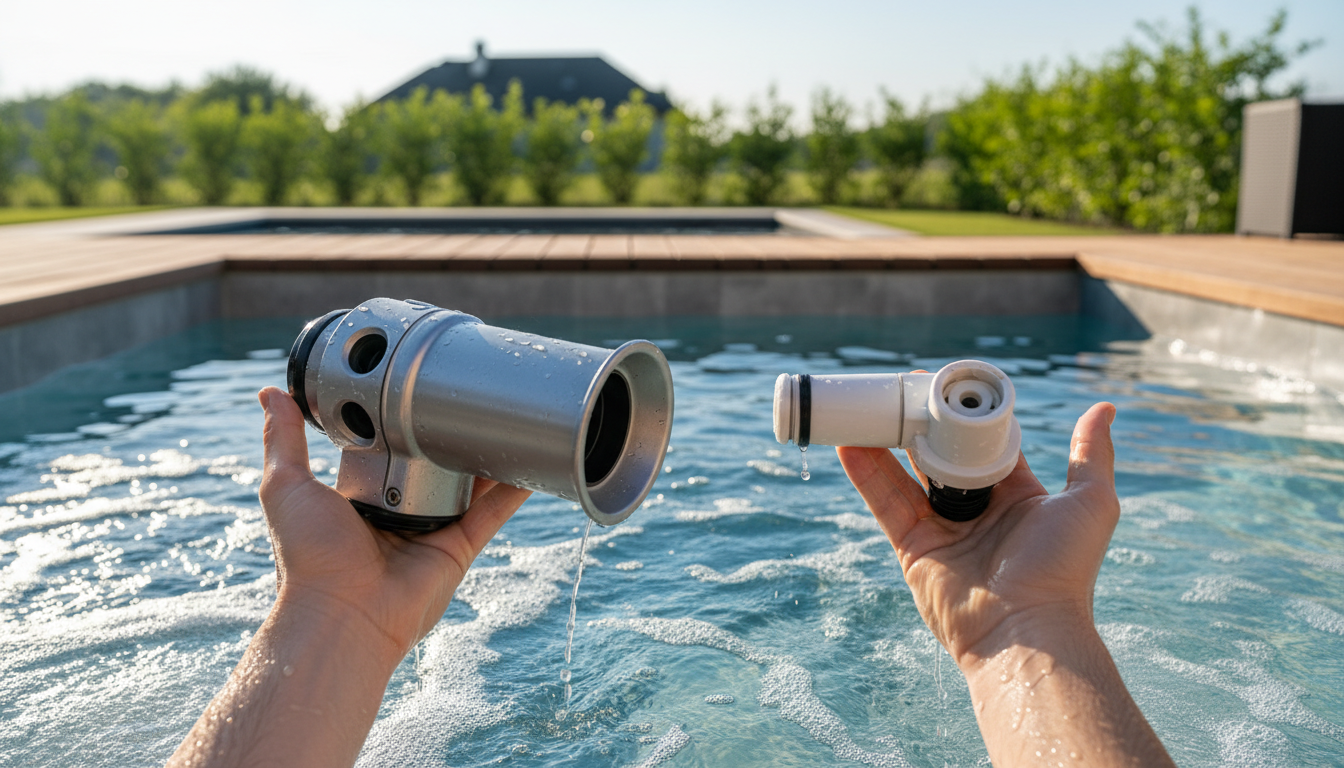
One day your swim spa current feels half-hearted, or a therapy jet that used to hammer your lower back is just trickling – and suddenly you’re wondering whether you’re in for a $30 fix or a $300 headache. The answer depends almost entirely on which type of jet you’re dealing with, and most people don’t realize how wide the gap is until they’re already knee-deep in a repair.
Replacing a standard therapy jet costs $15 to $80 for the part, and most owners can handle the swap in five minutes without draining the tub. Replacing a swim jet costs $50 to $300 or more per jet, often requires draining, and may need a plumber or spa technician. This article walks through what drives that price difference, what labor realistically adds, how to identify which jet you have, and when DIY makes sense versus when to call a pro.
Therapy Jets vs Swim Jets: What You’re Actually Replacing
A standard therapy jet is the small rotating or pulsing nozzle you’ll find clustered across the seating area of any hot tub. The insert – the part that snaps or twists into the jet housing – is what usually fails or breaks. The housing itself is molded into the shell and almost never needs replacing. Because therapy jets move relatively modest volumes of water (typically 5 to 20 gallons per minute per jet), they’re compact, plastic-heavy, and cheap to make.
A swim jet is a fundamentally different component. It’s designed to push 150 to 300 gallons per minute through a wide orifice, creating a current strong enough to swim against. The housing is larger – usually 4 to 6 inches in diameter at the face – and it connects directly to a dedicated pump rather than sharing a manifold with a dozen other jets. That dedicated pump connection is also why swim jet problems sometimes turn out to be pump problems in disguise, which is worth ruling out before you order parts.
Part Costs: The Real Numbers Side by Side
| Jet Type | Part Cost (per jet) | Labor (per jet) | Total (DIY) | Total (Pro) |
|---|---|---|---|---|
| Standard therapy jet insert | $15 – $80 | $0 (DIY) / $50 – $100 | $15 – $80 | $65 – $180 |
| Therapy jet housing (full) | $30 – $120 | $75 – $150 | $30 – $120* | $105 – $270 |
| Swim jet insert only | $50 – $150 | $75 – $150 | $50 – $150* | $125 – $300 |
| Swim jet full assembly | $150 – $300+ | $150 – $300 | Not recommended | $300 – $600+ |
*DIY for housing or swim jet insert assumes you’re comfortable draining the tub and working with basic plumbing. A full swim jet assembly replacement almost always warrants professional help.
Why Swim Jets Cost More: The Three Main Drivers
- Flow Volume: Swim jets are engineered to move up to 15 times more water per minute than a therapy jet. The internal nozzle, diffuser, and check valve all need to handle that volume without failing under continuous pressure, which requires heavier materials and tighter tolerances.
- Dedicated Plumbing: Most swim jets connect to their own pump via a 2-inch or 2.5-inch plumbing line rather than sharing a manifold. Replacing the full assembly means cutting and re-gluing PVC, which adds labor time and requires the tub to be drained completely.
- Proprietary Parts: Swim spa manufacturers often use brand-specific jet bodies with unique thread patterns. That limits your sourcing options and removes any price competition from generic aftermarket parts – the same dynamic that makes swim spa repairs generally more expensive than standard hot tub repairs.
A Worked Example: 2-Jet Swim Spa Repair
Say you have a 6-person swim spa with two swim jets, and both have cracked face plates with degraded internal nozzles. The jets are a mid-range proprietary design, OEM replacement assemblies priced at $180 each. You need a technician because the job requires draining 1,500 gallons, cutting two PVC lines, and re-plumbing. The tech charges $125 an hour and estimates 3 hours of work.
Parts: 2 x $180 = $360. Labor: 3 hours x $125 = $375. Total: $735. That’s a real number that surprises most owners who assumed a “jet replacement” would be a quick, cheap fix. Compare that to replacing six standard therapy jet inserts on the same tub: 6 x $40 average = $240 in parts, zero labor if you do it yourself, done in 20 minutes with no draining.
How to Tell Which Type of Jet You Have
Look at the face diameter first. Therapy jets are almost always under 3 inches in diameter; swim jets start at 4 inches and often reach 6 inches or more. If the jet face takes up most of a dinner plate, it’s a swim jet. You can also check your owner’s manual or the inside of the equipment cabinet door – most manufacturers list jet types and pump assignments there.
For parts sourcing, remove the jet insert and look for a molded part number on the back of the faceplate or on the jet body itself. This number is the fastest route to an exact OEM replacement. Generic aftermarket therapy jet inserts fit a surprisingly wide range of tubs – a 2-inch or 2.5-inch snap-in insert from a reputable supplier will usually fit even if it’s not the exact OEM part. Swim jets are less forgiving; the thread pitch and housing diameter tend to be brand-specific, so OEM is usually the safer call.
DIY vs Pro: Which Jobs You Can Actually Handle
Standard therapy jet inserts are genuinely DIY-friendly. You twist the faceplate counterclockwise about 90 degrees, pull the insert out, drop the new one in, and twist clockwise to lock. No tools, no draining, no plumbing. Even replacing a full therapy jet housing is manageable if you’re willing to drain the tub below the jet line and use basic PVC cement – total drain-and-refill time will be the biggest cost in hours, not dollars.
Swim jet inserts fall in the middle. If only the internal nozzle or face ring has failed and the housing is intact, some swim jet designs do allow an insert swap without full draining. Check whether the jet face twists out independently before assuming you need to drain. If the housing itself is cracked or the plumbing behind it is leaking, that’s a job for a pro. Cutting into 2-inch PVC behind a swim jet assembly and making a watertight repair requires proper technique – a poor PVC cement joint that fails six months later will cost far more to fix than the original repair would have.
One thing worth checking before any jet repair: water chemistry. Aggressive or imbalanced water (low pH especially) accelerates jet housing degradation, and it can also irritate eyes and skin in ways that get misattributed to other causes. If you find yourself replacing jets more often than every 5 to 7 years, it’s worth reviewing your chemical balance – a resource like the guide on why hot tub pH keeps rising can help you rule out chemistry as a contributing factor.
What Else Might Be Driving Your Jet Problem
Before ordering any replacement part, run through a quick diagnostic. Weak flow from a single therapy jet is almost always a clogged or broken insert – easy fix. Weak flow from all jets at once usually points to a pump issue or a clogged filter, not the jets themselves. Swim jet underperformance specifically can trace back to a failing impeller in the dedicated swim pump, which is a different repair entirely. If you end up needing to go deeper into the equipment bay, the breakdown of hot tub spa pack replacement costs is worth a read before you assume the worst – it covers what actually drives equipment repair pricing at that level.
AquaDoc makes a jet and surface cleaner that pool and spa owners use to clear mineral scale buildup inside jet housings before assuming the jet itself needs replacing – sometimes a good soak and rinse restores full flow without any parts at all.
Frequently Asked Questions
How much does it cost to replace a swim jet in a hot tub?
A swim jet replacement typically runs $50 to $300 per jet for the part alone, depending on size and brand. Add $75 to $150 per hour in labor if a technician does the work, making a full professional replacement $150 to $500 or more per jet for a larger swim spa unit. If both swim jets in a typical 2-jet swim spa need replacing, budget $600 to $900 all-in for a professional repair.
How much does a standard therapy jet cost to replace?
Standard therapy jet inserts cost $15 to $80 each, and most homeowners can swap them in under five minutes without tools. If you hire a technician, the labor cost will likely exceed the part cost, so DIY is almost always the right call for a basic therapy jet insert replacement.
Why are swim spa jets so much more expensive than regular hot tub jets?
Swim jets are designed to push 150 to 300 gallons per minute through a much larger orifice to create a current you can swim against. That requires a heavier housing, a larger internal nozzle, and often a dedicated pump connection – all of which cost more to manufacture and install than the small directional nozzles used for massage therapy.
Can I replace a hot tub jet myself to save money?
Standard therapy jets are almost always a DIY-friendly job: twist out the old insert, twist in the new one, no draining required. Swim jet replacement usually requires draining the tub, accessing the plumbing manifold, and sometimes cutting PVC – most owners are better off calling a technician for that work to avoid a leaky joint later.
What size swim jet do I need to replace in a 6-person swim spa?
Most 6-person swim spas use two to four swim jets with 4-inch to 6-inch face diameters. Check the jet body for a molded manufacturer part number before ordering, because internal nozzle diameter and thread pattern vary between brands and even between model years of the same brand. When in doubt, bring the old insert or faceplate to the supplier rather than guessing by measurement alone.
The bottom line: a standard therapy jet is a $15 to $80 part you can likely replace yourself this afternoon, while a swim jet repair is a $150 to $600-plus job that usually needs a professional. Knowing which type you’re dealing with before you reach for your wallet saves both time and money.