
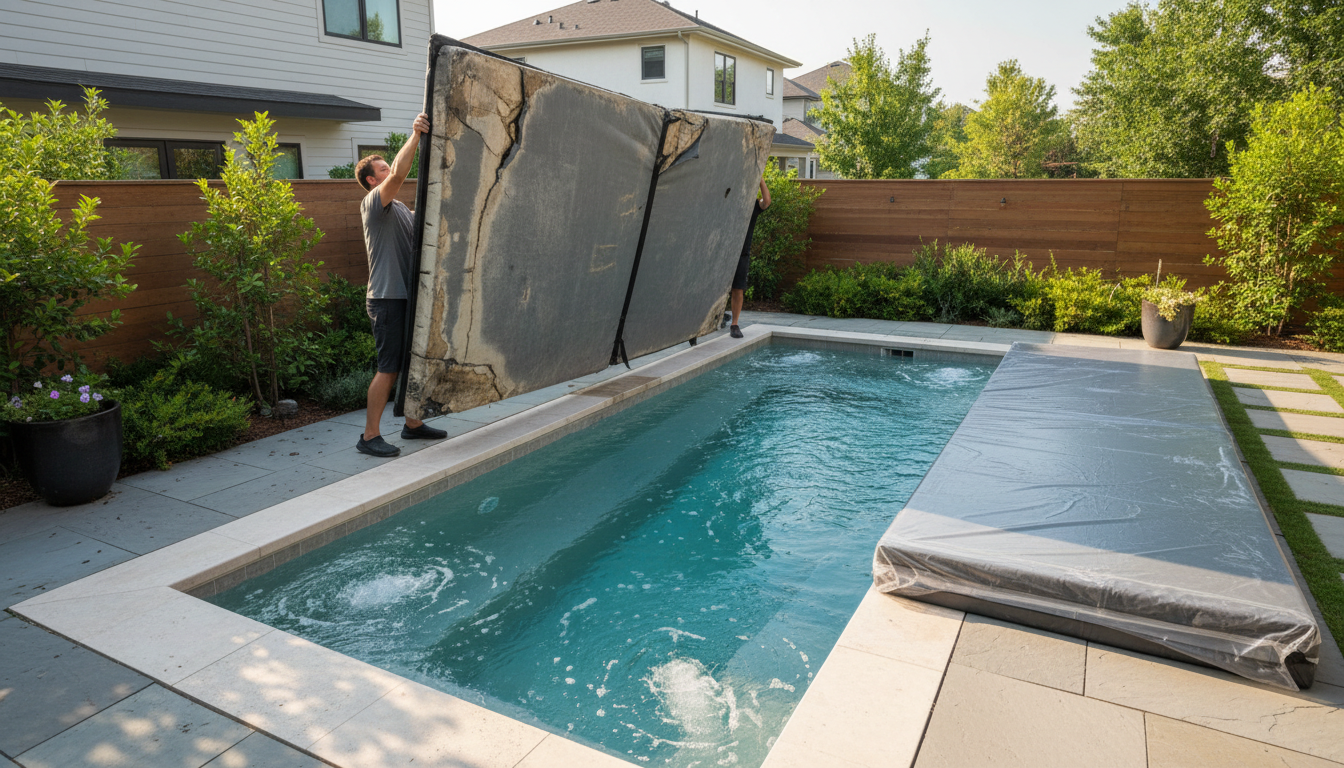
If you’ve ever tried to lift your swim spa cover after a cold week and felt like you were hoisting a waterlogged mattress, you already know something is wrong. Covers don’t always fail dramatically – they just get heavier, colder, and eventually useless.
Replacing a 12-foot swim spa cover costs between $400 and $1,800, with most owners landing in the $600 to $1,100 range for a solid mid-grade model. The wide spread comes down to foam density, vinyl grade, taper depth, and whether you’re ordering a custom size or using a dealer. This article walks through every cost factor, gives you a real comparison of what you get at each price tier, and flags the mistakes that cause people to buy the wrong cover twice.
Why Swim Spa Covers Cost More Than Standard Hot Tub Covers
A typical round or square hot tub cover is 7 to 8 feet across. A 12-foot swim spa cover is a completely different manufacturing challenge. The foam cores are longer, heavier, and harder to ship without warping. The vinyl has to wrap a much larger surface area. The hinge hardware needs to support more weight without sagging in the middle. All of that adds cost before you even think about insulation rating. Freight alone on a 12-foot cover can run $80 to $150, and it’s often baked into the listed price without being called out.
According to H2X’s swim spa cover guide, swim spas also operate at higher sustained temperatures than most hot tubs, which means a poor-performing cover costs you more in energy bills every month – making insulation quality a real financial factor, not just a comfort one.
What Drives the Price on a 12-Foot Cover
Four things account for most of the price variation you’ll see when shopping for a swim spa cover replacement.
- Foam Density: This is the single biggest quality indicator. Standard covers use 1.5 lb per cubic foot foam. Better covers use 2.0 lb foam, which absorbs less water over time and holds its R-value longer. On a 12-foot cover, upgrading from 1.5 lb to 2.0 lb foam typically adds $100 to $200 to the price.
- Taper Depth: A tapered cover – thicker in the center, thinner at the edges – sheds rain and snow rather than collecting it. A 4-inch center / 2-inch edge taper is the standard for heated swim spas. Going up to a 6-inch/4-inch taper adds weight capacity and thermal performance, and adds roughly $50 to $150 to the cost.
- Vinyl Grade: Marine-grade 32-oz vinyl resists UV degradation and cracking for 5 to 8 years. Budget covers use 24-oz vinyl, which starts peeling around year 3 in sun-exposed climates. The difference in material cost at the retail level is usually $75 to $150 on a cover this size.
- Custom Sizing: If your swim spa has an unusual footprint or an offset hinge, a custom-cut cover runs a 10 to 20 percent premium over a standard 12-foot size. Always measure lip to lip in both directions before ordering.
- Delivery and Installation: A 12-foot cover can arrive freight-only and may need two people to install. Dealer installation, where available, typically adds $75 to $200 on top of the cover price.
Price Tiers: What You Get at Each Level
Here’s how the market breaks down across budget, mid-range, and premium options for a 12-foot swim spa cover.
| Tier | Price Range | Foam Density | Vinyl Weight | Expected Lifespan |
|---|---|---|---|---|
| Budget | $400 – $600 | 1.5 lb/cu ft | 24 oz | 3 – 5 years |
| Mid-Range | $600 – $1,100 | 1.5 – 2.0 lb/cu ft | 32 oz marine-grade | 5 – 8 years |
| Premium | $1,100 – $1,800 | 2.0 lb/cu ft | 32+ oz UV-treated | 8 – 12 years |
Why These Differences Matter for a 12-Foot Model Specifically
On a standard 7-foot hot tub cover, a thin vinyl or low-density foam might hold up for a few years before you notice real problems. On a 12-foot swim spa cover, the same shortcuts fail faster. The longer foam cores flex more when you open and close the cover, which accelerates hinge wear. Lower-density foam in a longer core soaks up water at a higher rate because there’s simply more surface area exposed at the fold. A 12-foot budget cover that starts at 60 pounds can reach 90 to 100 pounds fully saturated – at which point it’s not protecting your water temperature, and it may be impossible for one person to lift safely.
As Cover Brothers notes in their replacement cost guide, a waterlogged cover can double your monthly heating costs because it has essentially stopped insulating. On a swim spa that’s running heat all winter, that’s not a theoretical loss – it adds up to real money in weeks, not months.
A Real Cost Example for a 12-Foot Swim Spa Cover
Say you own a 12-foot by 7-foot swim spa and the current cover is 6 years old, visibly cracked at the hinge, and noticeably heavier than when you bought it. You measure the outer lip and confirm the standard 12×7 footprint, so no custom sizing premium applies. You choose a mid-range cover: 2.0 lb foam, 4-inch/2-inch taper, 32-oz marine-grade vinyl. The cover itself lists at $750. Freight to the Midwest runs $95. You install it yourself with a neighbor’s help. Total out of pocket: $845. Compare that to a premium dealer-supplied cover with installation: the cover runs $1,200, installation is $150, freight is included – total $1,350. The mid-range DIY route saves you about $500 and, with proper care, will last just as long in a moderate climate.
When to Replace Rather Than Repair
Repair kits for cracked or faded vinyl cost $20 to $60 and can extend a cover’s surface life by a year or two. But if the foam core is waterlogged – meaning the cover feels significantly heavier than it did when new – no surface repair will fix the underlying problem. Wet foam loses its R-value immediately and keeps absorbing water. You’re just patching the outside of a sponge. The practical test: lift one corner. If it feels like it weighs more than 50 pounds for a half-panel on a 12-foot cover, the foam is compromised and replacement is the only fix.
If you’re doing a full refresh and planning to drain and refill around the same time, here’s how to tell when your hot tub water actually needs a drain – the timing often lines up well with cover replacement since you’re already doing a maintenance event.
It’s also worth checking that your heater is running efficiently before you invest in a new cover. A failing heater makes any cover look bad at heat retention, and troubleshooting a hot tub heater that’s not working can rule out that variable before you spend money on a replacement cover.
How to Order the Right Cover the First Time
Common mistakes that cause people to reorder – and pay shipping twice – are almost always measurement errors or missing the fold direction. Follow these steps before placing your order.
- Measure lip to lip in both directions, not inside the cabinet. Most manufacturers want the outer edge measurement with a note on any overhang.
- Confirm fold direction. Does the cover fold front-to-back or side-to-side? This affects hinge placement and whether the cover fits your lifter if you have one.
- Note any radius corners. Many swim spas have rounded corners with a 3 to 5-inch radius. If you don’t specify this, you’ll get a cover with square corners that gaps at the edges.
- Check foam density options against your climate. If you’re in a region with sustained freezing temperatures, 2.0 lb foam is worth the extra cost. AquaDoc and similar brands focused on water care will tell you the same thing: protecting your water chemistry over winter starts with a cover that actually insulates.
- Ask about the vapor barrier. The inner wrap around the foam core should be a sealed poly vapor barrier, not just a cloth sleeve. A proper barrier slows water infiltration into the foam dramatically.
For more detail on what makes a cover worth buying at different price points, this 2026 spa cover replacement cost breakdown is a thorough reference, and The Cover Guy’s pricing guide is useful for understanding how retailer markups affect what you’ll actually pay.
Frequently Asked Questions
How much does a 12-foot swim spa cover replacement cost?
A replacement cover for a 12-foot swim spa typically runs $400 to $1,800. Most owners pay $600 to $1,100 for a mid-grade cover with 4-inch tapered foam cores and marine-grade vinyl. Custom sizes, higher foam densities, or dealer installation push costs toward the top of that range.
How long should a swim spa cover last before replacing it?
A well-made swim spa cover should last 5 to 10 years with regular care. Signs it’s failing include a waterlogged core that feels heavy when you lift it, cracked or peeling vinyl, or a hinge that no longer seals flat. A saturated foam core can add 50 to 75 pounds to the cover’s weight and drastically reduces its insulating value.
What foam density should a 12-foot swim spa cover have?
For a 12-foot swim spa cover, choose a minimum foam density of 1.5 lb per cubic foot – but 2.0 lb is the better choice for cold climates or year-round use. Denser foam resists water absorption longer and holds its R-value, which matters because a swim spa runs continuously at higher temperatures than most standard hot tubs.
Why is a swim spa cover so much more expensive than a regular hot tub cover?
Swim spa covers cost more because they are significantly larger – a 12-foot model can weigh 60 to 90 pounds and requires longer, thicker foam cores that are harder to ship and manufacture without sagging. The extra vinyl material, reinforced hinge hardware, and freight costs all add to the price compared to a standard 7 or 8-foot hot tub cover.
Can I get a custom-size replacement cover for a 12-foot swim spa?
Yes, most cover manufacturers offer custom sizing at a 10 to 20 percent premium over a standard size. Measure your swim spa’s outer lip to lip in both directions, including any overhang, and confirm the fold direction before ordering – a mistake here means a cover that won’t close properly over the hinge.
For a 12-foot swim spa, budget $600 to $1,100 for a cover that will actually do its job, and prioritize foam density and a sealed vapor barrier over any cosmetic feature. The cover is the single biggest factor in your ongoing heating cost, so buying cheap here is one of the more expensive mistakes you can make.